
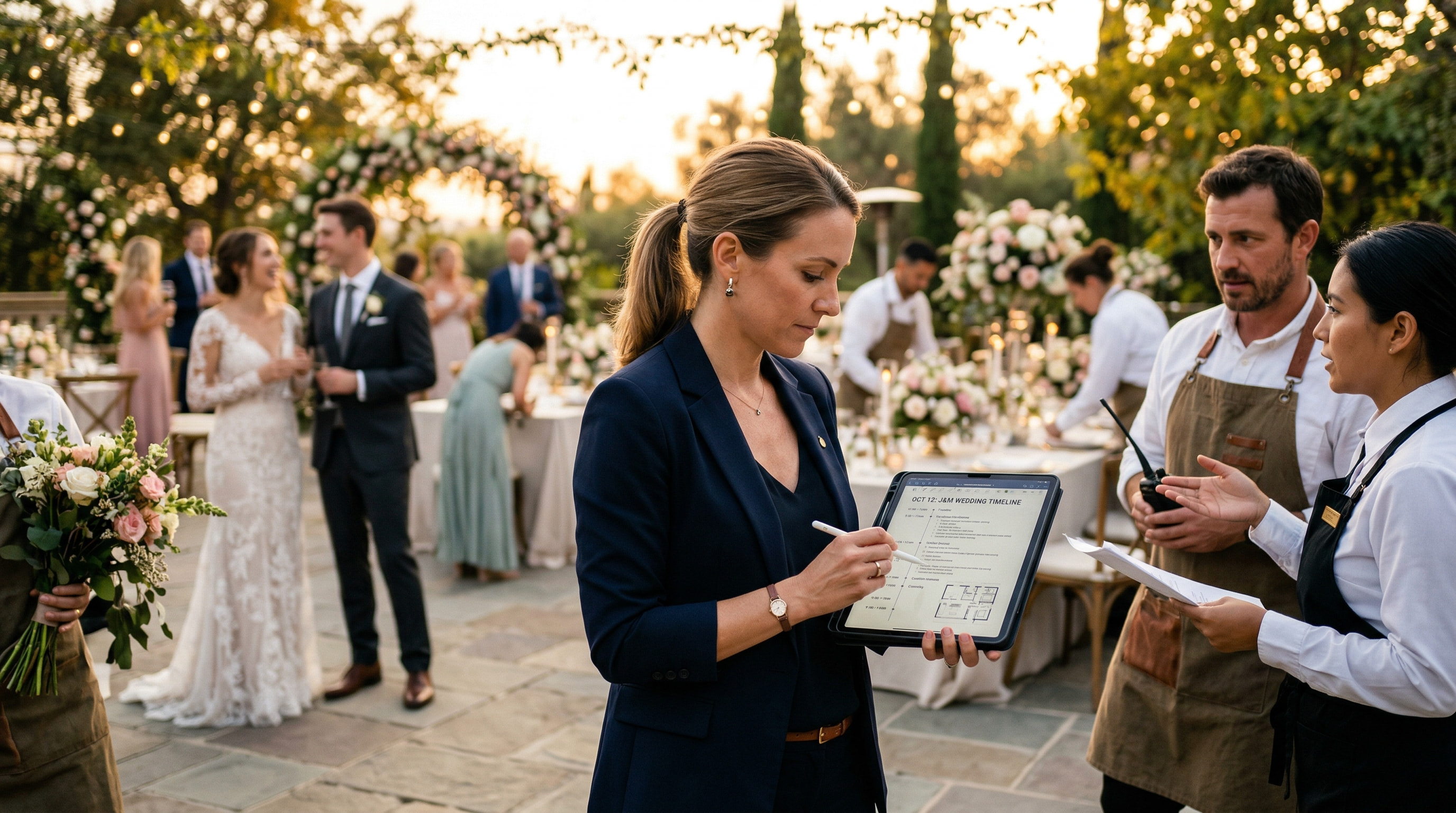
A wedding can look magical on the surface—but behind that magic is a timeline that either holds everything together or quietly falls apart.
As a planner, your timeline isn’t just a checklist. It’s the backbone of the entire event. When it’s done right, everything flows effortlessly. When it’s not, even the smallest delays can cascade into bigger problems.
Over time, certain mistakes show up again and again. Let’s walk through the most common ones—and how to avoid them.
1. Treating the Timeline as a Static Document
One of the biggest mistakes planners make is creating a timeline once… and not revisiting it.
A wedding timeline should evolve as decisions are made.
Vendor confirmations, guest count changes, and even weather conditions can impact the schedule. If the timeline isn’t updated regularly, it quickly becomes outdated—and unreliable.
Better approach:
Review and adjust the timeline weekly, and daily as the wedding approaches.
2. Not Building Buffer Time
Everything takes longer than expected on a wedding day.
Hair and makeup runs late. Guests arrive slowly. Vendors need extra setup time.
Without buffer time, one small delay can throw off the entire schedule.
Better approach:
Always add buffers between key activities:
10–15 minutes between transitions
Extra setup time for vendors
Flexibility before major moments like the ceremony
3. Overloading the Day
It’s tempting to fit everything into one day—multiple shoots, performances, long ceremonies, elaborate transitions.
But too much packed into a schedule leads to:
Rushed moments
Stressed clients
Exhausted vendors
Better approach:
Prioritize what truly matters to the couple and give those moments breathing space.
4. Ignoring Vendor Coordination
A timeline isn’t just for the planner—it’s for every vendor involved.
If vendors are not aligned with the schedule:
Photographers miss key shots
Catering gets delayed
Decor setup clashes with other teams
Better approach:
Share a clear, simplified version of the timeline with all vendors ahead of time, and confirm it again 2–3 days before the event.
5. Forgetting the Guest Experience
Planners sometimes focus so much on logistics that they forget how the day feels for guests.
Long waiting periods, unclear transitions, or confusion between events can impact the experience.
Better approach:
Think like a guest:
Is there a gap between ceremony and reception?
Are transitions smooth and guided?
Is there clear direction throughout the event?
6. Not Planning the “In-Between” Moments
Most delays happen in the transitions—not the main events.
For example:
Moving from ceremony to reception
Changing outfits
Vendor switchovers
These are often underestimated.
Better approach:
Plan transitions just as carefully as main events.
7. No Real-Time Flexibility
Even the best timeline won’t go exactly as planned.
Unexpected situations are part of every wedding.
The key difference is how quickly you adapt.
Better approach:
Have a dynamic system (or at least a clear structure) that allows you to adjust the timeline without confusion.
Final Thoughts
A perfect wedding timeline isn’t about precision—it’s about flexibility, clarity, and control.
The best planners don’t just create timelines. They manage them, adjust them, and use them as a tool to stay ahead of problems.
When your timeline works, everything else becomes easier—vendors stay aligned, couples feel confident, and the entire event flows naturally.
And in the end, that’s what every planner is aiming for.